
By: Jared Stachiw, Quetico Provincial Park Biologist
Quetico Provincial Park is one of the hidden jewels of the Ontario Parks system. Tucked away in Northwestern Ontario, between Thunder Bay and Fort Frances, it is comprised of both Boreal and Great Lakes-St. Lawerence forests. At nearly 1.2 million acres of rugged wilderness, it is one of the largest parks in the province, and boasts regal red pine, incredible night skies, abundant fish, and hundreds of lakes and streams that are perfect for canoeing. It is truly a special place. We are incredibly proud to protect and steward this wild landscape and do so responsibly by continually refining our understanding of the area and its natural process through monitoring, inventorying, and research. The Quetico Foundation provides critical support to the science-based management of Quetico Provincial Park by advocating for the park and its protection, funding research that helps us better understand the park’s ecosystems, and by hiring a team of keen students to assist the park in collecting data in the remote backcountry that contributes to improved park management and the overarching goal of protecting and improving the ecological integrity of Quetico.
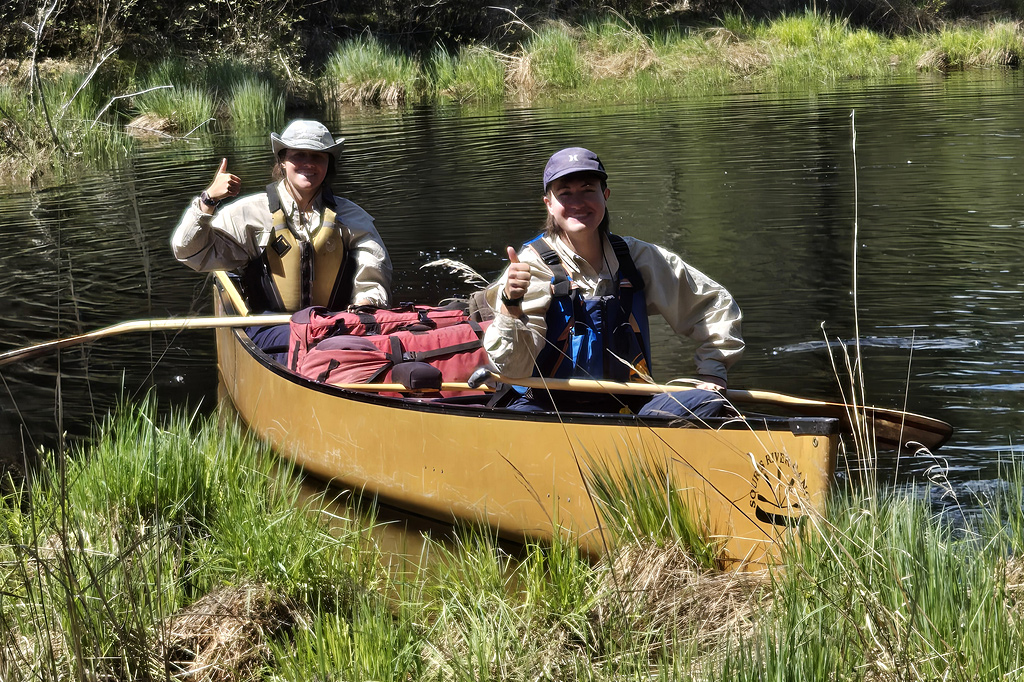
This year, the Quetico Foundation Summer Research Team was comprised of Katie Tripp (our Team Leader) and Lowen Hoenisch-Matthes (our Team Member). Katie has been a part of the Quetico Foundation’s team on-and-off for years, bringing ample experience, while for Lowen this was their first time in the wilds of Quetico. The team persevered through wind, rain, bugs, and difficult portages to collect the information we need to properly steward park. The Summer Research Team’s season was a success as they collected data to address management questions about the status of breeding birds in the park, refined our understanding of aquatic invasive species distribution, assessed the effects of climate change on lake trout populations, and studied the impacts of wildfire on lake ecology; all while enjoying the rugged wilderness with its picturesque views, solitude, and the satisfaction of hard work.
Ontario Breeding Bird Atlas
The 2025 field season marked the final year of data collection for the Ontario Breeding Bird Atlas – a provincial effort to map current distributions and relative abundance of breeding birds across Ontario. Every twenty years, since 1981, this survey has been conducted, with the aim to inform conservation strategies and guide provincial environmental policies. This year, the Summer Research Team contributed to this important work by completing three songbird surveys on Beaverhouse, McAree, Brewer, Lac La Croix, and Mack Lakes, as well as the Wawiag River. To complete the surveys the team deployed acoustic recording equipment from May to July to track which avian species are breeding within Quetico Park.
Spiny Waterflea Surveillance
During the later part of August, the Summer Research Team embarked on a series of spiny waterflea surveillance monitoring trips. They collected three or more plankton samples from each lake of interest to check for the presence of this detrimental invasive species in our waterbodies. Continual surveillance for this species is critical as we work to refine our understanding of their distribution and adapt our management and education approaches to try and limit their spread. The focus this year for spiny waterflea surveillance was on lakes that have received repeated float plane landings by both park visitors and park researchers/operations. We are pleased to report that our surveys did not find any evidence of new invasions.
Climate Change and Lake Trout
In Quetico Provincial Park, lake trout are among the most important cold-water species from both an ecological perspective, as they are keystone predators, and from a recreational perspective, as they are loved by anglers. However, as a cold-water species, lake trout are increasingly at risk from climate change. As temperatures increase, the cold-water area in lakes that is prime habitat for lake trout will retract, restricting their population size, and possibly making shallower lakes no longer conducive to continued lake trout persistence. Collecting the data to understand how different climate change scenarios may impact the amount of habitat lake trout have in Quetico has been a multiyear project, and finally we have collected all the necessary data to address this management question – keep your ears open for an upcoming report on this work.
Wildfire Impacts on Lake Ecology
Quetico Provincial Park’s wilderness status and its landscape relatively uninfluenced by contemporary human disturbance, paired with the wildfires of 2021, provides a unique opportunity to research the impacts of fire on Boreal lake ecology. Since 2022, Quetico Park has worked collaboratively with the Aquatics Research and Monitoring Section of the MNR to address this question with the goal of supporting science-based decision making related to how terrestrial disturbances influence nearby lakes. Over the past three years this research has been focused on understanding how warmer water temperatures and increased nutrients and metal concentrations in lakes directly adjacent burned forests has impacted aquatic primary producers (zoo- and phyto-plankton); however, this year the project was expanded to include the impacts on the food web structure as a whole by looking at how these changes in plankton populations have impacted fish communities. This year the Quetico Foundation’s Summer Research Team participated in both the plankton and water chemistry monitoring and the fish community research. This involved conducting a fisheries assessment, in conjunction with MNR staff, on Kahshahpiwi Lake where the fish community was sampled to learn about its composition, age structure, feeding relationships, and other important aspects of the fisheries’ life history. The information gleaned from this study will become more and more important to management decisions as wildfire frequency and severity are projected to increase due to warming and altered precipitation patterns related to climate change.
Quetico Provincial Park is extremely thankful for the Summer Research Team, their efforts make it possible for us to collect data across the park so we can make informed management decisions that will help keep this protected area healthy and vibrant for future generations. We would not be able to continue our research and monitoring activities at the same level without the generous and continual support from the Quetico Foundation and its donors. We look forward to next summer when we can keep exploring questions and collecting data for the benefit of Quetico’s ecological integrity. Keep an eye out for our future projects related to rare aquatic species, the state of forest regeneration in areas impacted by the 2021 fires, and more monitoring of birds, invasive species, and species at risk.